November 21, 2026
Home improvement projects can offer a deep sense of accomplishment when you successfully paint a living room, assemble patio furniture, or install new shelving over a Saturday afternoon. However, when the task involves the wiring behind your drywall or the breaker panel in your garage, treating the work as a casual weekend undertaking introduces severe risks to your safety, your property, and your finances. Residential electrical systems are unforgiving networks of live current that demand specialized training, precise diagnostic tools, and strict adherence to local safety standards. Attempting to tackle electrical repairs or installations without formal expertise often turns a minor household upgrade into an immediate emergency. Hiring a professional electrician ensures that every connection, circuit, and fixture operates reliably without putting your household in harm's way.
Understanding the Hidden Dangers of Residential Wiring
Many homeowners assume that flipping a circuit breaker to the off position eliminates every hazard inside a wall or junction box. In reality, residential power distribution involves complex pathways where live currents can remain present even when a single switch appears disconnected. Working near energized components without proper testing equipment and insulated gear exposes an untrained person to life-threatening injuries.
Facing Severe Shock and Electrocution Hazards
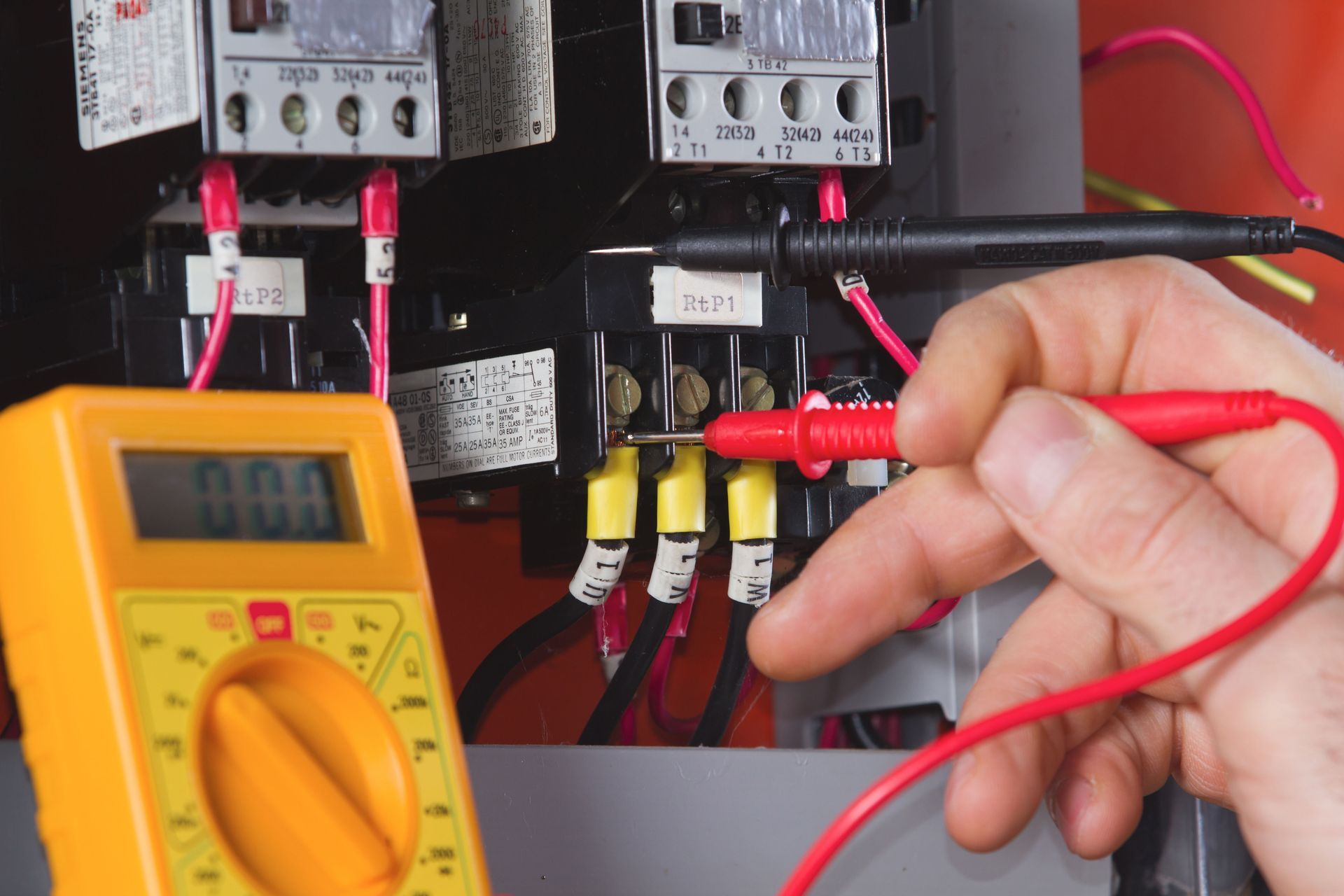
Electricity travels along the path of least resistance, and the human body conducts current far more readily than dry wood or plastic insulation. Even standard household voltage can disrupt heart rhythms, cause severe internal burns, or trigger involuntary muscle contractions that prevent a person from letting go of a live wire. Shared neutral wires, mislabeled breaker panels, and back-fed circuits frequently catch inexperienced individuals off guard. A professional electrician uses calibrated voltage meters and lockout procedures to verify that every conductor is completely de-energized before touching a single wire.
Creating Long-Term Fire Risks Behind Walls
The most dangerous mistakes in electrical work rarely announce themselves the moment you turn the power back on. Loose wire nuts, nicked insulation, over-tightened terminal screws, or mismatched wire gauges can allow a light fixture or outlet to function normally for months while silently generating intense heat inside your walls. Over time, this localized overheating degrades surrounding materials and ignites wooden framing or insulation through arc faults. Because these hazards remain hidden behind drywall, homeowners often remain unaware of the danger until smoke detectors sound in the middle of the night.
Addressing Legacy Wiring in Older Homes
Properties constructed several decades ago often harbor aging electrical components that behave very differently from modern wiring systems. Aluminum branch wiring, ungrounded two-prong outlets, and deteriorating cloth-insulated conductors can become brittle and hazardous the moment they are disturbed during a casual weekend upgrade. Disturbing these legacy materials without understanding how they expand, contract, or connect to modern copper fixtures frequently leads to arcing and connection failures. Evaluating older infrastructure safely requires specialized knowledge of historical building methods and approved retrofitting techniques.
Navigating Complex Power Demands and Code Standards
Modern households place far greater strain on electrical infrastructure than homes built just a few decades ago. High-efficiency climate systems, induction ranges, home offices, and electric vehicle charging stations require carefully balanced loads and dedicated circuits to operate safely.
Managing High-Voltage Household Circuits
Understanding how power enters and circulates through a residence is essential before modifying any component of the system. According to This Old House, the majority of American residences are supplied with 120/240V alternating current power, while heavy-duty household appliances demand the full 240V capacity to run properly. Working on circuits that deliver this level of electrical energy requires exact calculations for wire sizing, breaker amperage, and grounding paths. Connecting a high-demand appliance to an undersized circuit or miswiring a double-pole breaker can instantly destroy expensive equipment or trigger catastrophic panel failures. Relying on a professional electrician protects both your household infrastructure and your major appliances from damaging voltage irregularities.
Meeting Strict Building Codes and Permit Requirements
Electrical work is governed by the National Electrical Code alongside municipal amendments that update every few years to address emerging safety findings. These regulations dictate everything from the exact placement of ground-fault circuit interrupters near water sources to the maximum number of conductors permitted inside a single junction box. Unpermitted or non-compliant electrical modifications frequently surface during home inspections when you decide to sell your property, forcing costly tear-outs and delays at the closing table. Even worse, homeowner insurance providers regularly deny claims for fire or water damage if an investigation reveals that unpermitted electrical work contributed to the loss.
Planning for Future Electrical Capacity
Adding a new circuit or upgrading a major fixture without calculating your home's overall load capacity can easily push an existing service panel past its safe operating limit. Every breaker panel has a maximum amperage rating that dictates how much simultaneous electrical demand the system can support without overheating or tripping main disconnects. A professional electrician performs thorough load calculations before recommending upgrades, ensuring your panel can handle both current household needs and future additions without straining the main service entrance.
Recognizing the True Value of Experienced Diagnostics
When an outlet stops working, lights flicker unexpectedly, or a breaker trips repeatedly, the visible symptom is rarely the root cause of the problem. Replacing a worn receptacle or installing a higher-amperage breaker only masks an underlying fault while allowing the true issue to worsen out of sight.
Identifying Underlying System Failures
Electrical troubleshooting requires a methodical approach that traces voltage drops, ground faults, and loose connections across entire branch circuits. What looks like a faulty wall switch might actually stem from a deteriorating splice in the attic, a corroded bus bar inside the main service panel, or an overloaded circuit serving too many rooms. When you bring in a professional electrician, you gain access to diagnostic expertise that pinpoints the exact origin of the malfunction rather than relying on guesswork. Resolving the root problem restores dependable performance across your entire electrical system.
Saving Time and Avoiding Costly Rework
Weekend projects frequently stretch across multiple days when unexpected complications arise, such as brittle cloth wiring in older walls, cramped junction boxes, or missing neutral conductors required for modern smart switches. Multiple trips to the hardware store, purchased tools that sit unused afterward, and damaged drywall quickly erode any initial savings you hoped to achieve. Engaging a professional electrician from the outset streamlines the entire process, allowing complex installations, panel upgrades, and troubleshooting tasks to be completed cleanly in a fraction of the time.
Knowing When to Call for Expert Assistance
Every homeowner should know how to locate their main electrical panel, reset a tripped breaker, and test ground-fault outlets using the built-in test buttons. Beyond those basic operational checks, any task that requires opening an electrical enclosure, altering wiring, or adding new load to your system belongs in qualified hands.
Protecting Your Household and Investment
Whether you are upgrading outdated lighting, installing dedicated circuits for new equipment, or investigating sudden power outages, safe execution depends on formal training and field experience. Working with a professional electrician gives you confidence that every wire is properly terminated, grounded, and inspected to meet current safety standards. Instead of sacrificing your weekend to frustrating guesswork and unnecessary physical danger, you can keep your focus on enjoying a comfortable, well-lit home.
Scheduling Reliable Electrical Service
Electrical systems form the backbone of daily comfort and productivity in both residential and commercial spaces, making skilled workmanship essential whenever repairs or upgrades are needed. If you are planning an electrical upgrade or dealing with persistent wiring issues, reach out to someone who can evaluate your system safely and accurately. Contact Blue State Electric LLC today to schedule an appointment with an experienced
professional electrician for your next electrical project.